

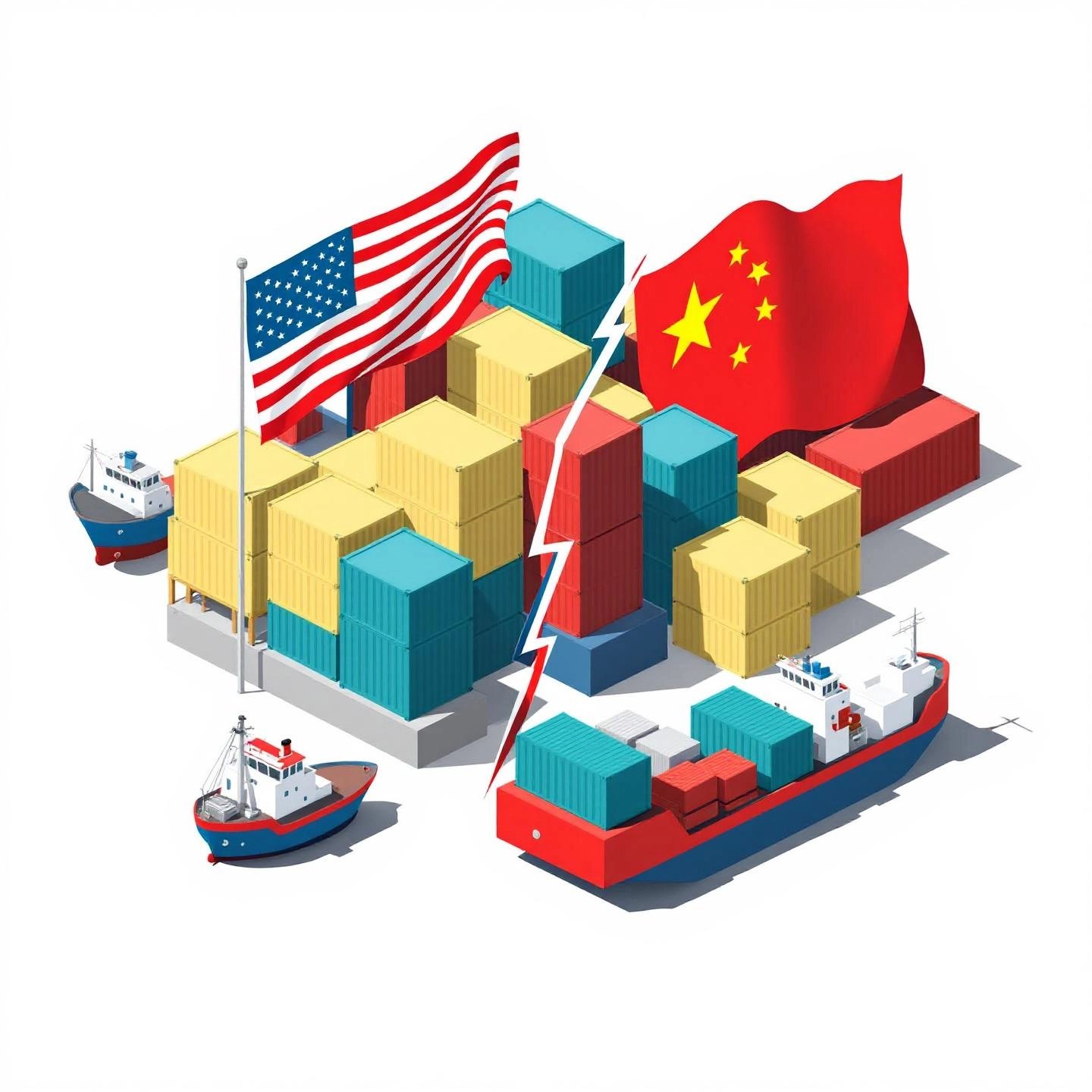
Understanding the US Average Tariff Rate on China
When you hear about tariffs in the news, do you ever wonder what they really mean for your wallet or your business? Sounds complex? Let’s break it down. A tariff is simply a tax that one country places on goods imported from another country. The primary reasons for imposing tariffs are to protect domestic industries from foreign competition, generate government revenue, and sometimes to exert leverage in international negotiations or address trade imbalances. For example, if the US imposes a tariff on Chinese electronics, those products become more expensive for American consumers, potentially boosting sales of US-made alternatives or raising government income through collected duties (Investopedia).
But tariffs aren’t just abstract policy tools—they’re powerful levers that can reshape entire economies. The us average tariff rate on China is a crucial metric for several reasons:
- Business Planning: Companies importing goods from China must factor in these added costs, which can affect everything from pricing strategies to supply chain decisions.
- Consumer Impact: Higher tariffs often mean higher prices at the checkout counter, as businesses pass on some or all of these costs to shoppers.
- Global Ripple Effects: Changes in the current China tariff rate can disrupt global supply chains, influence international trade flows, and even spark retaliatory actions from trading partners.
Imagine you’re a retailer sourcing electronics or apparel from China. A sudden hike in tariffs could force you to raise prices, seek alternative suppliers, or even rethink your product lineup. On a larger scale, these shifts can impact jobs, investment decisions, and the overall health of the economy.
So why focus on the us average tariff rate on China in 2025? This number isn’t just a statistic—it’s a signal of the broader state of US-China relations, the competitiveness of American industries, and the direction of global commerce. As tariffs have evolved from targeted measures to a complex web of overlapping duties, understanding how they are set, calculated, and enforced has become essential for anyone involved in international trade.
In this deep dive, you’ll learn:
- The historical evolution of US-China tariff policies, including what triggered the current trade war
- How the average tariff rate is calculated, and why it’s more complicated than it seems
- The direct and indirect economic impacts on businesses, consumers, and the global market
- Strategies companies are using to navigate the current tariff landscape and mitigate risk
By the end, you’ll have a clear understanding of the forces shaping the current China tariff rate and what it means for your business, your budget, and the broader economy. Let’s get started by exploring how US-China tariff policies have evolved over time—and why today’s rates are at historic highs.

The Historical Context of US-China Tariffs
Ever wonder how the US average tariff rate on China changed so dramatically in recent years? To truly understand the current landscape, it helps to look back at how US-China trade relations evolved—from decades of relatively low tariffs to the rapid escalation that defines today’s environment. Imagine a timeline where what started as steady growth in trade suddenly became a rollercoaster of policy shifts, investigations, and retaliatory actions.
Pre-2018: Open Markets and Growing Trade
Before 2018, US-China trade was largely governed by World Trade Organization (WTO) rules and most-favored-nation status. Tariffs on Chinese goods were low and stable, averaging around 3.1% in 2017. This period was marked by:
- China’s entry into the WTO in 2001, accelerating trade flows between the two economies
- Consistent US trade deficits with China, peaking at $375.6 billion in 2017
- Relatively minor disputes handled through multilateral or bilateral negotiations, rather than sweeping tariff hikes
During these years, businesses and consumers benefited from affordable imports, and supply chains became deeply intertwined across the Pacific (Wikipedia).
2018–2020: The Trade War Ignites
Everything changed in 2018. The US launched a Section 301 investigation into China’s trade practices, focusing on issues like forced technology transfer and intellectual property theft. The result? The start of a tit-for-tat tariff escalation that would reshape global trade. Here’s how the timeline unfolded:
- March 2018: US announces tariffs on steel and aluminum, soon followed by tariffs on $50 billion of Chinese goods
- July 2018: China retaliates with its own tariffs on US exports
- September 2018: US adds tariffs on an additional $200 billion of Chinese goods; China responds in kind
- February 2020: The Phase One agreement is signed, but average tariffs remain high—US tariffs on Chinese goods average 19.3%, covering about two-thirds of imports; China’s average tariffs on US goods rise to 21%
By 2020, the us average tariff rate on China had more than sextupled compared to pre-trade war levels. The term us average tariff rate on china 2020 became a key metric for understanding the new cost structure facing importers and exporters alike.
2021–2025: Entrenchment and Escalation
While hopes for a swift resolution lingered, the trade war’s effects became entrenched. The Biden administration maintained Trump-era tariffs and introduced targeted increases, especially on strategic sectors like semiconductors and green technology. Then, in 2025, a new wave of tariff hikes pushed average rates to unprecedented heights:
- By early 2025, the US average tariff rate on China spiked to 126.5% before settling at 51.1% after a temporary truce. China’s retaliatory tariffs peaked at 147.6% before dropping to 32.6% (PIIE)
- Coverage expanded—by 2025, tariffs applied to nearly all bilateral trade, compared to roughly two-thirds at the trade war’s peak in 2020
This period marked a shift from targeted tariffs to broad, overlapping duties—creating a highly volatile environment for global supply chains and business planning.
From Stability to Volatility: Setting the Stage
Tracing the us average tariff rate on china by year reveals a dramatic transformation: from low, predictable rates to a complex web of overlapping measures. The rapid escalation and subsequent volatility have left businesses navigating high costs, uncertainty, and shifting rules. As we move forward, understanding how these tariffs are structured and calculated is more important than ever—let’s break down the mechanics in the next section.
Understanding Section 301 and Other Key Tariffs
Ever looked at a product label and wondered why the price keeps rising year after year? If you import from China—or just buy goods made there—you’re feeling the impact of a complex web of US tariffs. Let’s unravel how these duties are structured, why Section 301 is at the heart of it all, and how “stacked” tariffs push the US effective tariff rate on China to levels few anticipated.
Section 301: The Backbone of US Tariff Action on China
When you hear about tariffs on Chinese goods, Section 301 of the Trade Act of 1974 is usually the main driver. But what exactly is Section 301? In simple terms, it lets the US government impose tariffs or other trade restrictions on countries that engage in unfair trade practices—think forced technology transfer, intellectual property theft, or market access barriers. In 2018, a Section 301 investigation found China guilty of such practices, sparking the first wave of sweeping tariffs that still shape trade today.
Section 301 tariffs aren’t just a one-time penalty—they’re layered on top of other duties, often covering thousands of product categories. For example, a single Chinese import might face a 25% Section 301 tariff, applied directly on top of regular customs duties. These lists of affected products are extensive, so if you’ve ever searched for a U.S. tariffs on China List PDF, you know how complicated it can get.
Beyond Section 301: Reciprocal, Fentanyl, and National Security Tariffs
Section 301 isn’t the only tool in the US trade arsenal. In recent years, several other tariff actions have been layered on top:
- Reciprocal Tariffs: In 2025, the US introduced “reciprocal” or “Liberation Day” tariffs, initially set at 34% and later raised as high as 145% before settling at 10% after a temporary truce. These are meant to match or counter the tariffs imposed by China and other trade partners.
- Fentanyl-Related Tariffs: Targeting the illicit drug trade, the US imposed a 20% tariff on a range of Chinese chemical and pharmaceutical products associated with fentanyl production. These duties are stacked on top of existing tariffs, further raising the total cost for importers.
- Section 232 Tariffs: Originally related to national security, these apply 25% tariffs on steel and 10–50% on aluminum imports, including those from China. Some household appliances containing steel are also affected by a 50% duty, calculated on the steel content of the product.
What does this mean for your bottom line? The answer: products can be hit by multiple tariffs at once, making the actual cost much higher than any single headline rate suggests.
Stacked Tariffs: Why the Effective Rate Is So Much Higher
Imagine you’re importing a batch of electronics from China. You might expect to pay a base tariff—say, 10% or 20%. But that’s just the beginning. Here’s how “stacked” tariffs work:
- You pay the Most-Favored Nation (MFN) base tariff (often 2–3.3% for many goods).
- On top of that, a Section 301 tariff (7.5–25% or more) applies to thousands of products.
- Then, if the product is on a reciprocal or fentanyl-related list, another 10–34% (or even higher) is added.
- If the item is steel-based, a Section 232 tariff of 25–50% may also apply, sometimes just to the steel portion.
These layers multiply—not just add—costs. For some goods, the US effective tariff rate on China can exceed 50%, and for certain categories or postal shipments, it can reach 54% or more.
| Tariff Type | Typical Rate | Targeted Product Categories |
|---|---|---|
| MFN Tariff | 2–3.3% | General imports (base rate) |
| Section 301 Tariff | 7.5–25% | Electronics, machinery, chemicals, vehicles, consumer goods |
| Reciprocal Tariff (2025) | 10–34% (up to 145% at peak) | Nearly all Chinese imports |
| Fentanyl-Related Tariff | 20% | Chemicals, pharmaceuticals |
| Section 232 Tariff | 25–50% | Steel, aluminum, appliances containing steel |
| USPS Postal Tariff (low-value shipments) | 54% + $100 fee | All product types under $800 via USPS |
Real-World Example: How Stacked Tariffs Impact Import Costs
Let’s say you’re importing a $20 smart plug from China. Under the current structure, you could face:
- 15% Section 301 tariff ($3)
- 30% base reciprocal tariff ($6)
- If shipped via USPS, a 54% postal tariff ($10.80) plus a $100 handling fee
Your $20 product could end up costing nearly $140 if shipped via USPS, or $29 via private carrier—an increase of up to 600% in landed cost. That’s the power of stacked tariffs in today’s trade regime (Harris Sliwoski).
Why This Matters for Businesses and Consumers
These overlapping duties aren’t just bureaucratic details—they directly impact pricing, profit margins, and supply chain decisions. For many importers, especially small businesses or e-commerce sellers, the sudden spike in costs can be existential. Even if you’re just a consumer, you’ll notice higher prices or fewer options on store shelves.
As we move forward, understanding how these tariffs are calculated—and how they affect your bottom line—is crucial. In the next section, we’ll demystify the methods behind the average tariff rate, so you can see the full picture and make smarter decisions in a volatile trade environment.

How the Average Tariff Rate on China is Calculated
When you hear that the US average tariff rate on China is over 50%, you might wonder—how is that number actually calculated? Is it just a simple average of all the tariff rates, or is there something more complex going on behind the scenes? Let’s break down the math and show why these figures matter for anyone trading across borders.
Simple Average vs. Trade-Weighted Average Tariff Rate
Imagine you have a basket of imported goods from China—electronics, apparel, machinery, and toys. Each item might face a different tariff rate. If you simply add up all the rates and divide by the number of products, you get a simple average. Sounds easy, but it doesn’t reflect what’s really happening in the marketplace. Why? Because some products are imported in huge volumes, while others barely register in trade statistics.
This is where the trade-weighted average tariff rate comes in. Instead of treating every product equally, this method gives more weight to goods that make up a larger share of imports. For example, if smartphones account for 30% of total imports from China and face a 25% tariff, that rate has a much bigger impact on the overall average than a 10% tariff on a rarely imported item. In other words, the trade-weighted average reflects the real-world cost burden faced by importers and consumers.
- Simple Average: Adds up all tariff rates and divides by the number of products, regardless of trade volume.
- Trade-Weighted Average: Multiplies each product’s tariff rate by its share of total import value, then sums the results and divides by total imports (World Bank).
What Factors Influence the US Average Tariff Rate on China?
Sounds complex? It can be, especially when you consider:
- Import Value: High-value goods (like consumer electronics) have a bigger impact on the average than low-value goods.
- Product Variety: The wider the range of products covered by tariffs, the more complex the calculation.
- Tariff Coverage: As of 2025, tariffs apply to nearly 100% of imports from China, making the average rate a true reflection of the overall burden.
- Stacked Duties: Many products face multiple overlapping tariffs, which are compounded in the trade-weighted calculation.
Ultimately, the trade-weighted approach offers a more accurate picture of the real costs facing businesses and consumers. It’s the standard used by organizations like the World Bank and Peterson Institute for International Economics when reporting headline rates.
Current US and China Average Tariff Rates: A Dramatic Shift
So, what’s the current state of play? In 2025, the US average tariff rate on China stands at 51.1%, while China’s average retaliatory tariff on US goods is 32.6%. These numbers are not just academic—they represent a historic escalation from the pre-trade war era, when average tariffs were in the low single digits.
| Year | US Average Tariff Rate on China | China Average Tariff Rate on US |
|---|---|---|
| 2017 (Pre-Trade War) | 3.1% | 8.0% |
| 2020 (Phase One Deal) | 19.3% | 21.0% |
| 2025 (Current Estimate) | 51.1% | 32.6% |
You’ll notice that the us average tariff rate on china vs china has widened significantly over time, with both sides ratcheting up duties in response to each other’s moves. Today’s rates are over 15 times higher than in 2017, and nearly triple the levels seen during the early years of the trade war (PIIE).
Why These Averages Matter for Your Business
Understanding how the average tariff is calculated isn’t just a numbers game—it’s essential for budgeting, pricing, and supply chain strategy. If you’re importing electronics, apparel, or machinery, the trade-weighted average gives you a realistic sense of your landed costs. For US exporters, knowing China’s average retaliatory rate helps you assess market opportunities and risks.
As the next section will show, these high averages have ripple effects far beyond the customs desk—impacting everything from consumer prices to investment decisions. Ready to see how these numbers play out in the real economy? Let’s explore the economic consequences for US businesses and consumers.
Economic Consequences for US Businesses and Consumers
How High Tariffs Reshape Business Decisions and Consumer Budgets
When you import goods from China, what happens to your bottom line when tariffs jump from single digits to over 50%? Imagine you’re a small business owner sourcing electronics or apparel. Suddenly, the cost of every shipment spikes—not just by a few dollars, but by double-digit percentages. That’s the impact of US tariffs on China in action, and it’s not just a theoretical problem: it ripples through every link in the supply chain and lands squarely at the feet of American businesses and consumers.
- Higher Import Costs: Tariffs are essentially a tax on imported goods. For every $100,000 in Chinese imports, a 51.1% average tariff means an additional $51,100 in costs. Importers must decide whether to absorb these costs, cut margins, or pass them on to customers.
- Reduced Profit Margins: Many businesses, especially small and medium-sized enterprises, operate on tight margins. Increased landed costs from tariffs eat into profits, making it harder to compete or reinvest in growth.
- Supply Chain Disruptions: Shifting suppliers or rerouting production to avoid tariffs isn’t always quick or easy. The process is often expensive, time-consuming, and fraught with risk, particularly when alternative sources may not meet quality or regulatory standards.
How Tariffs Affect Everyday Consumers
Think tariffs are just a business problem? Not quite. When costs rise for importers, those increases often appear on store shelves. According to recent estimates, the 2025 tariff regime has raised overall consumer prices by 2.3% in the short run—translating to an average household loss of $3,800 per year. For lower-income families, the burden is even greater relative to income, making tariffs a regressive form of taxation.
- Apparel and Textiles: Prices have jumped 17% since the latest round of tariffs, making clothing and shoes noticeably more expensive.
- Food and Groceries: Even your grocery bill isn’t immune—food prices are up 2.8% due to direct and indirect tariff effects.
- Automobiles: Motor vehicle prices have risen by 8.4%, adding about $4,000 to the price of an average new car.
Broader Economic Ripples: Investment, Jobs, and Uncertainty
Tariffs aren’t just about higher prices—they reshape the entire economic landscape. Here’s what’s happening behind the scenes:
- Manufacturing Shifts: Some companies relocate production to countries like Vietnam or Mexico, but such moves require time, capital, and often involve new risks or lower quality standards.
- Investment Uncertainty: With trade policies changing rapidly, businesses hesitate to make long-term investments in equipment, facilities, or workforce expansion.
- Job Losses: Sectors that rely on imported components—such as electronics, automotive, and consumer goods—face layoffs or hiring freezes as profit margins shrink and costs climb (Florida Tech Online).
- Global Competitiveness: As US goods become more expensive, American exporters may lose market share abroad, further impacting jobs and growth.
Why Quality Assurance Is Critical in a High-Tariff World
Here’s a scenario that keeps many importers up at night: You pay a hefty, non-refundable tariff on a shipment from China, only to discover product defects or compliance issues upon arrival. The result? Not only are you stuck with unsellable inventory, but you also lose the entire tariff outlay—a double blow to your bottom line.
This is where a trusted China inspection service becomes indispensable. By verifying product quality, specifications, and compliance before goods leave the factory, you minimize the risk of costly surprises. Rigorous inspections help ensure that every dollar spent on tariffs goes toward sellable, high-quality merchandise, protecting your profit margins and reputation.
| Risk | Impact | How Inspection Mitigates |
|---|---|---|
| Product Defects | Unsellable inventory, lost tariff payments | Early detection prevents shipment of faulty goods |
| Non-Compliance | Customs delays, fines, or rejections | Verification of regulatory standards before shipping |
| Shipment Errors | Incorrect quantities or SKUs, costly returns | Final inspection ensures order accuracy |
Turning Risk Into Opportunity: The Strategic Value of Inspection
In a high-tariff environment, every mistake is magnified. By investing in professional inspection services, you not only safeguard your shipments but also gain leverage in negotiations with suppliers, build stronger customer trust, and enhance your brand’s resilience. Think of it as turning a challenging trade landscape into a competitive advantage—one where diligence and quality assurance are your best allies.
As we explore the global response to US tariffs in the next section, keep in mind that risk management—especially through robust inspection protocols—remains a cornerstone of successful international trade in 2025 and beyond.

China’s Retaliation and the Global Supply Chain
What Happens When China Strikes Back?
When the U.S. raises tariffs on Chinese goods, how does China respond—and what does it mean for American exporters and global supply chains? Imagine you’re a U.S. farmer, carmaker, or tech supplier. Overnight, your products face steep new barriers in one of the world’s biggest markets. Sounds daunting? That’s exactly what’s happened as China has steadily escalated its own tariffs in response to U.S. actions.
China’s Retaliatory Tariffs: Which U.S. Sectors Are Hit Hardest?
In 2025, China’s average retaliatory tariff rate on U.S. products surged to as high as 125%, with some categories facing effective rates up to 140%. These moves have made many American goods nearly unmarketable in China, disrupting long-standing trade flows and business relationships (Holland & Knight). Here are the main U.S. export sectors affected:
- Agriculture: Soybeans, wheat, corn, cotton, sorghum, poultry, pork, beef, dairy, and various fruits and vegetables now face additional duties ranging from 10% to 84%, on top of existing rates.
- Energy: Coal, liquefied natural gas (LNG), and crude oil are subject to new tariffs and export controls, with coal and LNG seeing rates as high as 140%.
- Automotive: Large displacement vehicles, pickup trucks, and agricultural machinery have been hit with extra tariffs (10–15%), making U.S.-made vehicles less competitive in China.
- Technology and Medical Devices: Certain electronics, medical equipment (like CT scanner X-ray tubes), and dual-use technologies are not only subject to tariffs but also new export licensing requirements and antidumping investigations.
- Other Sectors: Poultry products, bone meal, and other food items from select U.S. exporters have faced import suspensions due to regulatory and food safety disputes.
Beyond tariffs, China has also imposed non-tariff barriers—such as export restrictions on rare earth minerals, expanded unreliable entity lists, and new licensing rules for critical technologies—further complicating market access for U.S. firms.
The Rise of the China Plus One Strategy
With tariffs and regulatory risks rising, many global businesses are asking: “Is it time to stop putting all our eggs in the China basket?” Enter the China Plus One strategy. This approach encourages companies to diversify their sourcing and manufacturing by adding alternative countries—like Vietnam, India, or Mexico—into their supply chains.
- Risk Mitigation: By spreading operations across multiple countries, companies reduce their exposure to trade disruptions, sudden tariff hikes, or political tensions in any single market.
- Cost Optimization: Rising wages and regulatory costs in China have made Southeast Asia and India attractive for labor-intensive manufacturing, while Mexico offers proximity and trade advantages for North American markets.
- Access to New Markets: Setting up in “Plus One” countries allows businesses to tap into new consumer bases and benefit from local trade agreements.
For example, major electronics brands are ramping up production in Vietnam, and automakers are expanding assembly operations in Mexico. India’s electronics exports have tripled since 2018, and it is now a leading destination for smartphone manufacturing.
New Complexities in Global Supply Chain Management
Sounds like a win-win? Not so fast. While the China Plus One strategy can boost resilience, it also introduces new challenges:
- Quality Control: Ensuring consistent product standards across multiple countries requires robust quality assurance and supplier vetting.
- Logistics and Infrastructure: China’s integrated transport and industrial networks are hard to match. Companies must assess whether “Plus One” countries have the ports, roads, and workforce needed to support large-scale operations.
- Regulatory Risks: Each new country brings its own set of trade rules, labor laws, and compliance hurdles. Businesses must stay agile and adapt to shifting political and economic landscapes.
- Supply Chain Visibility: Managing suppliers across several regions makes real-time oversight and scenario planning more complex—but also more important than ever (Grydd).
Ultimately, the global supply chain is becoming more fragmented and dynamic. Companies that succeed will be those that invest in supply chain visibility, nurture strong relationships with multiple suppliers, and maintain the flexibility to pivot as trade policies evolve.
As you consider the future of U.S.-China trade, keep in mind that today’s tariff battles are not just about numbers—they’re reshaping where and how the world’s goods are made. In the next section, we’ll explore strategies for navigating these volatile policies and preparing your business for whatever comes next.

Navigating Future US Tariff Policies on Chinese Imports
Will the Future of US-China Tariffs Be More Volatile Than Ever?
When you try to plan your next import cycle, do you ever wonder—will the tariff rate be the same tomorrow, or will it change overnight? If you’re feeling whiplash from the rollercoaster of US-China trade policy, you’re not alone. The future of US-China tariffs is marked by ongoing uncertainty, with recent truces, sudden escalations, and statutory reviews all shaping the landscape for importers and exporters alike.
- Recent Truces: In mid-2025, the US and China agreed to temporarily reduce reciprocal tariffs to 10% for a 90-day window, a dramatic drop from previous highs of 125–145%. However, this reduction is time-limited and subject to renewal or reversal depending on diplomatic progress (China Briefing).
- Escalations: Just months earlier, tariffs had climbed rapidly, with the US layering new duties (such as fentanyl-related tariffs and universal baseline tariffs) on top of existing Section 301 and Section 232 measures. These actions underscore how quickly policies can shift in response to political or security concerns.
- Statutory Reviews: The US Trade Representative’s four-year reviews can lead to the extension, modification, or removal of tariffs, as seen in the 2024 review that adjusted rates across 14 product groups. These reviews inject further unpredictability into long-term planning.
So, what can businesses do to stay ahead in this unpredictable environment? Let’s break down the most effective strategies for navigating the future of US-China tariffs.
Building Resilience: Tariff Engineering, Alternative Sourcing, and Flexible Supply Chains
Imagine you’re an importer who suddenly faces a 50% tariff on your main product line. What’s your next move? The most agile businesses don’t just react—they prepare by designing supply chains that can adapt quickly to new tariff regimes.
| Strategy | Description | Example |
|---|---|---|
| Tariff Engineering | Modifying products or production processes to classify goods under lower tariff codes | Switching to alternative materials or assembly locations to reduce duty rates |
| Alternative Sourcing | Diversifying suppliers and manufacturing locations beyond China | Adopting a “China Plus One” or multi-country sourcing approach |
| Flexible Supply Chains | Designing logistics and procurement systems that can quickly pivot as tariffs change | Using technology for scenario planning and rapid supplier onboarding |
- Tariff Engineering: By redesigning products or shifting value-added steps to other countries, businesses can sometimes reclassify goods under lower-duty categories—potentially saving millions in tariffs.
- Alternative Sourcing: Companies are increasingly spreading risk by sourcing components from Vietnam, India, or Mexico, or by leveraging Free Trade Agreements and Foreign Trade Zones to lower their overall tariff exposure.
- Flexible Supply Chains: Advanced analytics and automation help companies simulate tariff scenarios, optimize sourcing decisions, and switch suppliers or logistics routes with minimal disruption.
Why Proactive Risk Management Is Non-Negotiable
Sounds like a lot to juggle? It is—but the cost of getting it wrong can be catastrophic. One overlooked shipment defect or compliance issue can mean paying non-refundable tariffs on unsellable goods, plus lost sales and reputational damage. That’s why robust risk management is no longer optional—it’s essential.
Here’s where professional China inspection services come into play. By investing in Pre-Shipment Inspections and Factory Audits, you can:
- Ensure product quality and compliance before goods leave China
- Catch and correct defects early, preventing costly shipment rejections
- Protect your tariff investment—since duties are paid regardless of product quality, every dollar spent on inspection helps secure your bottom line
- Build leverage with suppliers by demonstrating a commitment to high standards and accountability
Imagine discovering a critical defect after your shipment has already cleared US customs. Not only do you lose the value of the goods, but the tariff paid is gone for good. With professional inspection services, you greatly reduce this risk, especially as tariffs remain high and policy changes are frequent.
Continuous Monitoring and Scenario Planning
What’s the best way to future-proof your import business? Continuous monitoring of tariff developments, scenario planning, and regular supplier vetting. Leverage digital compliance tools to track regulatory changes, automate tariff calculations, and maintain detailed documentation for potential duty drawback claims or customs audits.
- Monitor official US and Chinese trade policy updates regularly
- Use scenario planning to model the impact of potential tariff increases or new exclusions
- Establish relationships with logistics partners and inspection agencies that can respond quickly as conditions change
Ultimately, the only certainty in the future of US-China tariffs is continued volatility. Businesses that succeed will be those that combine strategic sourcing, proactive risk management, and robust quality assurance. As we wrap up, remember: being prepared isn’t just about surviving the next tariff hike—it’s about turning uncertainty into opportunity.
Conclusion
When you look back at the journey through US-China tariffs, one thing is clear: the US average tariff rate on China 2025 stands at a historic high, fundamentally reshaping the landscape for importers, exporters, and everyday consumers. But what does this really mean for you—and how can you protect your business as the trade environment continues to evolve?
Why Tariff Costs Are So Much Higher
Imagine paying not just one, but several layers of tariffs on your next shipment from China. That’s the reality in 2025. With Section 301, reciprocal, and even special-purpose duties stacked together, the effective tariff rate on many Chinese goods now exceeds 50%. For some categories, especially those shipped via postal services, rates can be even higher. This escalation isn’t just a policy headline—it’s a daily cost that ripples through supply chains, squeezes profit margins, and ultimately lands in consumers’ wallets (Yale Budget Lab).
- Businesses face higher landed costs, tighter margins, and the constant threat of sudden tariff changes.
- Consumers see price hikes on everything from apparel to electronics, with the average household losing thousands of dollars in purchasing power.
- The broader economy absorbs slower growth, sectoral shifts, and increased uncertainty in investment and hiring.
Uncertainty Is the New Normal: Why Staying Agile Matters
Tariff policy isn’t set in stone. As recent truce periods and abrupt escalations have shown, rates can shift overnight in response to political negotiations or global events. For businesses, this means that yesterday’s plan may be obsolete tomorrow. The only constant is change—and the need for continuous vigilance.
- Scenario planning and regular risk assessments are essential. Don’t just rely on current rates—anticipate potential hikes or new retaliatory measures.
- Build flexibility into your sourcing and logistics. Consider alternative suppliers, diversify production locations, and stay ready to pivot as needed.
- Monitor official announcements and leverage digital tools to track regulatory shifts in real time.
Strategic Planning and Quality Assurance: Your Best Defense
Here’s a scenario every importer dreads: you pay steep, non-refundable tariffs on a shipment, only to discover major defects or compliance issues once the goods arrive. In a high-tariff world, mistakes are more costly than ever. That’s why strategic planning isn’t just about finding the lowest duty rate—it’s about protecting every dollar you invest.
- Leverage pre-shipment inspections and supplier audits: By using a trusted China inspection service, you can verify quality, catch defects early, and ensure that your tariff outlay supports only viable, sellable goods.
- Document your processes: Maintain clear records of inspections, contracts, and compliance checks. This not only protects you in case of disputes but also streamlines claims or negotiations if issues arise.
- Communicate with your suppliers: Set clear expectations for quality and accountability, and use inspection results to drive continuous improvement.
Key takeaway: In 2025, every dollar spent on tariffs is at risk if your shipments aren’t thoroughly vetted before leaving China. Pre-shipment quality assurance is no longer optional—it’s a core part of maximizing returns and protecting your investment in a volatile trade environment.
Turning Uncertainty Into Opportunity
The US average tariff rate on China 2025 is more than just a number—it’s a signal that global trade has entered a new era of complexity and risk. But with the right strategies, you can turn this challenge into a competitive advantage. Stay informed, stay agile, and make quality assurance the foundation of your import operations. By partnering with a reliable China inspection services, you ensure that every shipment—and every tariff dollar—works for you, not against you.
US Average Tariff Rate on China: FAQs
1. What is the current US average tariff rate on Chinese imports?
As of 2025, the US average tariff rate on goods imported from China is 51.1 percent. This reflects a significant increase from pre-trade war levels and is the result of multiple overlapping tariffs, including Section 301, reciprocal, and other special duties. The elevated rate affects almost all categories of imports from China and has a substantial impact on both businesses and consumers.
2. How are US tariffs on Chinese goods calculated?
US tariffs on Chinese imports are calculated using a trade-weighted average, which considers both the tariff rate and the value of each product category imported. Many products are subject to several layers of tariffs, such as base Most-Favored Nation duties, Section 301 tariffs, reciprocal tariffs, and others. This stacking of duties can result in a much higher effective tariff rate for many goods.
3. How do US tariffs on China affect American consumers and businesses?
High tariffs increase the cost of imported goods, leading to higher prices for consumers and reduced profit margins for businesses. Importers must pay non-refundable tariffs upfront, so any issues with product quality or shipment errors can result in significant financial losses. These increased costs can also cause supply chain disruptions and job losses in import-dependent sectors.
4. What is the role of inspection services in managing tariff risks?
Inspection services, like those provided by Eagle Eyes, are essential for US importers facing high tariffs. By verifying product quality, compliance, and order accuracy before goods leave China, inspection services help ensure that tariffs are only paid on sellable, compliant products. This reduces the risk of costly losses and maximizes the return on each dollar spent on tariffs.
5. What strategies can businesses use to adapt to changing US-China tariffs?
To navigate tariff volatility, businesses are adopting strategies such as tariff engineering (modifying products to lower duties), alternative sourcing (using suppliers outside China), and building flexible supply chains. Proactive risk management, including pre-shipment inspections and scenario planning, is crucial for protecting investments and staying competitive in a high-tariff environment.

